Alphabet Learning Puzzle
Learning the alphabet is one of the most fundamental milestones in early childhood education, and the Alphabet Learning Puzzle transforms this essential skill into a joyful, hands-on adventure. Designed for children between the ages of 2 and 6, this puzzle combines colorful letter tiles, illustrated companion images, and a satisfying tactile experience to make A-Z mastery something children genuinely look forward to every day.
Whether your child is just beginning to recognize letters or is ready to connect letters to sounds and words, the Alphabet Learning Puzzle meets them exactly where they are and gently challenges them forward.
Product Design and Features
The Alphabet Learning Puzzle consists of 26 individual letter pieces — one for each letter of the English alphabet — each paired with an iconic illustrated image beginning with that letter. “A” features a smiling apple, “B” a bright yellow banana, “C” a playful cat, and so on through to “Z” with a zebra in bold black and white stripes.
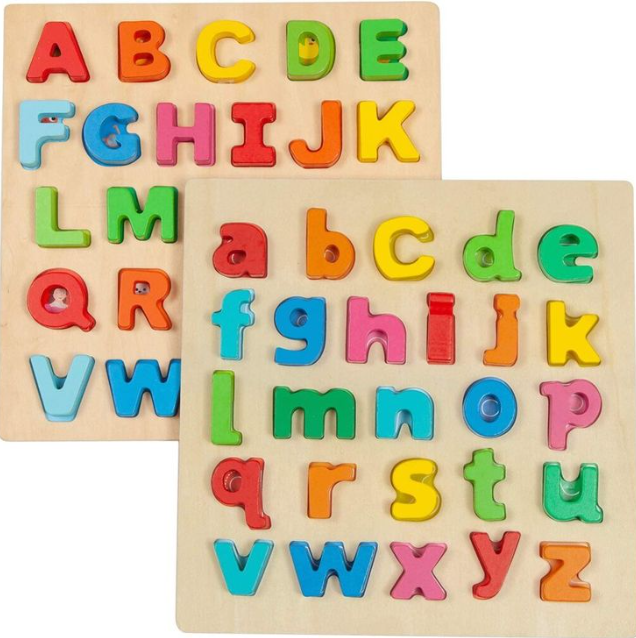
Each letter piece is crafted from thick, durable foam or premium wood (depending on the edition), with smooth rounded edges that are completely safe for little hands. Letters are printed in both uppercase and lowercase on opposite sides of each tile, giving children double the learning value from a single piece.
The puzzle board itself is a large, color-coded grid where each letter slot is highlighted in a distinct background color, helping children associate specific letters with specific visual cues — a technique known as color-coded learning that significantly accelerates recognition speed.
Educational Philosophy Behind the Design
The Alphabet Learning Puzzle was designed in close collaboration with early childhood educators and literacy specialists. The design reflects research-backed principles of phonics education, where each letter is paired with its most common sound and a single, clear illustration to reinforce sound-symbol association.
This approach mirrors the foundational principles of programs like Jolly Phonics and the Orton-Gillingham method, which have been proven effective across decades of literacy education research. By making these principles accessible through play, the puzzle ensures that children absorb core literacy concepts without the anxiety that can accompany formal instruction.
Skills Developed Through Play
Regular play with the Alphabet Learning Puzzle supports development across multiple areas:
- Letter recognition: Children learn to visually distinguish all 26 letters, including tricky pairs like b/d and p/q.
- Phonemic awareness: Connecting each letter to its illustrated word builds awareness of the sounds that letters represent.
- Sequencing: Placing letters in order from A to Z teaches the concept of sequence and order, foundational to mathematical thinking.
- Fine motor control: Manipulating individual letter pieces develops the hand strength and precision needed for handwriting.
- Vocabulary expansion: Exposure to 26 illustrated words expands receptive and expressive vocabulary simultaneously.
Alphabet Learning Puzzle
In home settings, the Alphabet Learning Puzzle is most effective when incorporated into daily routines. A 10-15 minute puzzle session before bedtime or after breakfast creates a consistent learning habit without overwhelming young learners. Parents can make sessions interactive by singing the alphabet song while placing pieces, or by picking a “letter of the day” and focusing exclusively on that letter — its sound, its word, and examples found around the house.
In classroom settings, teachers use the puzzle as a literacy center activity where children rotate through independently or in pairs. The cooperative element of working with a partner on the puzzle builds social skills alongside academic ones.
Material Quality and Safety
Safety is the top priority in the construction of the Alphabet Learning Puzzle. All materials used are certified free from harmful chemicals. The non-toxic inks used for printing are waterproof and fade-resistant, ensuring that the colorful illustrations remain vibrant through thousands of play sessions. Pieces are sized appropriately for toddlers — large enough to prevent any choking hazard — and the puzzle board is finished with a smooth, splinter-free surface throughout.
Gift Packaging and Value
The Alphabet Learning Puzzle is presented in a beautifully illustrated gift-ready box that doubles as a storage container. Keeping all 26 pieces organized is effortless with the custom-fit tray inside the box. The puzzle makes an outstanding gift for birthdays, holidays, school graduations, or as a welcome-to-kindergarten present.
Conclusion
The Alphabet Learning Puzzle is the perfect gateway to literacy. By engaging children’s hands, eyes, and minds simultaneously, it creates rich, multi-sensory learning experiences that stick. Start your child’s reading journey on the strongest possible foundation — order the Alphabet Learning Puzzle today.
Interactive Learning Activities with the Alphabet Learning Puzzle
The Alphabet Learning Puzzle shines brightest when used as a springboard for interactive, multi-sensory activities that extend learning beyond the puzzle board itself. Here are some engaging activities that parents and educators have found particularly effective:
Alphabet Hunt: After completing the puzzle, pick three random letter pieces and challenge your child to find objects around the house that begin with each letter. “We have A for Apple — can you find something in the kitchen that starts with A?” This activity bridges abstract letter knowledge with concrete real-world experience, dramatically accelerating reading readiness.
Mystery Bag: Place several letter pieces in a cloth bag and have your child reach in, feel a piece, and guess the letter before pulling it out. This tactile challenge adds an exciting sensory dimension to letter recognition and develops the tactile discrimination skills that support handwriting development.
Alphabet Songs and Rhymes: Pair puzzle sessions with classic alphabet songs. As your child places each letter, sing the corresponding verse of a personalized alphabet song you create together. Children remember information embedded in song far more reliably than information presented in isolation.
Letter Stamping: After puzzle time, provide foam stamps or fingerpaint and have your child practice writing the letters they just worked with. The transition from three-dimensional puzzle piece to two-dimensional written letter is a powerful bridge in early literacy development.
Connecting the Puzzle to Broader Literacy Development
The Alphabet Learning Puzzle is most powerful when embedded within a rich literacy environment. Pair puzzle sessions with regular read-aloud time, library visits, and exposure to books that celebrate letters — alphabet books, rhyming stories, and phonics readers all reinforce the letter-sound connections the puzzle builds. Children who engage with the puzzle in this broader literacy-rich context show measurably faster progress in early reading assessments than those who encounter letters only in formal instructional settings.
Parents who have made the Alphabet Learning Puzzle a cornerstone of their home literacy environment frequently report that their children begin recognizing letters in everyday environments — on street signs, cereal boxes, and storefronts — months earlier than average. This transfer of learning from puzzle to real-world context is the clearest sign that deep, meaningful learning has taken place.
Alphabet Learning Puzzle
In an age of alphabet apps and digital learning games, the Alphabet Learning Puzzle offers something that no screen can replicate: genuine physical engagement with letters as tangible objects. Research in embodied cognition shows that physical manipulation of learning materials creates stronger, more durable memories than passive screen interaction. When a child picks up the letter “M,” feels its weight and shape, and places it in its spot, they are encoding the letter through visual, tactile, kinesthetic, and spatial channels simultaneously — a richness of encoding that dramatically outperforms tapping a letter on a glass screen.
