
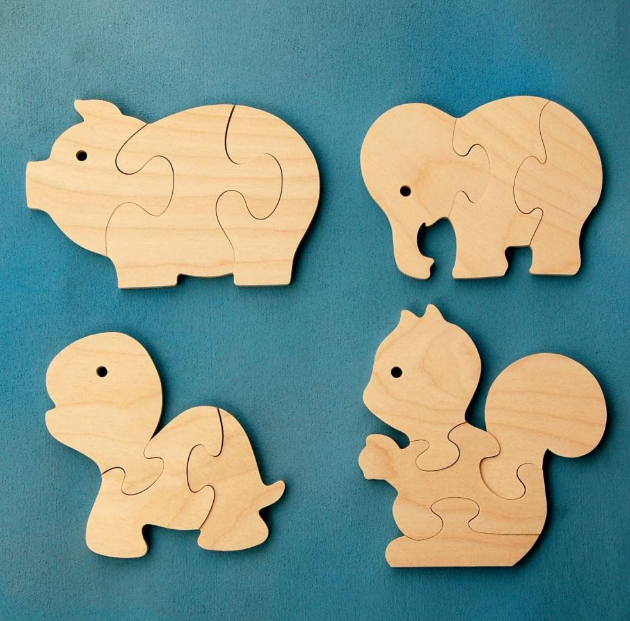
Dinosaur Jigsaw Puzzle
Few subjects capture children’s imaginations quite like dinosaurs. The Dinosaur Jigsaw Puzzle harnesses this natural fascination and channels it into a rich, rewarding puzzle experience that develops critical thinking, spatial reasoning, and a love of natural history. Whether your child dreams of being a paleontologist or simply loves T-Rexes and Triceratops, this puzzle delivers prehistoric excitement paired with genuine educational value.
Product Details and Design
The Dinosaur Jigsaw Puzzle features a stunning full-color illustration of a prehistoric landscape populated by 15 accurately depicted dinosaur species. The artwork balances scientific accuracy with age-appropriate whimsy — dinosaurs are depicted in their correct ecological habitats (Brachiosaurus wading in shallow water, Velociraptors in woodland settings, Pterodactyls soaring above cliffs) while maintaining the playful visual style that children love.
Available in three difficulty levels — 48 pieces for ages 4-6, 100 pieces for ages 6-9, and 200 pieces for ages 8-12 — there is a version perfectly calibrated for every skill level. The 100-piece version is the most popular, offering enough complexity to be genuinely challenging without being discouraging.
Educational Content
The completed puzzle doubles as an educational poster. The reverse side of each puzzle box features a comprehensive dinosaur guide with facts about each species depicted, including their geological period, diet, size, and notable characteristics. Children who complete the puzzle are naturally motivated to read the companion guide, creating an organic pathway from play to learning.
Key educational themes embedded in the puzzle include geological time periods, the distinction between dinosaurs and other prehistoric creatures (pterosaurs, plesiosaurs), basic concepts of ecology and food chains, and the science of paleontology and fossil discovery.
Developmental Benefits
- Spatial reasoning: Assembling jigsaw pieces requires mental rotation and spatial visualization skills that are directly linked to mathematical ability.
- Pattern recognition: Identifying and matching colors, textures, and edge shapes builds rapid pattern recognition skills.
- Persistence: Completing a 100+ piece puzzle over multiple sessions teaches children to maintain focus on long-term goals.
- Fine motor skills: Manipulating individual puzzle pieces develops the hand-eye coordination and finger strength needed for writing.
Materials and Quality
The Dinosaur Jigsaw Puzzle is printed on premium recycled cardboard with a linen-texture surface that reduces glare and gives the completed puzzle an elegant, tactile quality. Pieces are precisely die-cut with tight tolerances that produce a satisfying “click” when correctly placed. The thick cardboard construction ensures pieces are robust enough to withstand the enthusiastic handling that dinosaur-loving children typically apply to their toys.
Dinosaur Jigsaw Puzzle
Once completed, the Dinosaur Jigsaw Puzzle is a stunning display piece. Many families frame their completed puzzles as bedroom art — and the vibrant prehistoric landscape makes a striking addition to any child’s room. Puzzle glue (sold separately) can be applied to preserve and frame the completed image permanently.
Conclusion
The Dinosaur Jigsaw Puzzle combines the timeless appeal of dinosaurs with the developmental power of jigsaw puzzle play. It is educational, beautiful, and endlessly rewarding. Order yours today and unleash your child’s inner paleontologist.
Dinosaur Facts Hidden in the Puzzle
One of the unique joys of the Dinosaur Jigsaw Puzzle is the educational content embedded within the illustration itself. As children assemble the puzzle, they naturally encounter accurate depictions of dinosaur behavior, habitat, and anatomy that spark questions and conversations about prehistoric life. The Brachiosaurus in the background munching on tree tops illustrates the herbivorous diet of long-necked sauropods. The pack of Velociraptors in the foreground demonstrates the social hunting behavior increasingly recognized by paleontologists. Every detail in the illustration was chosen deliberately to convey accurate natural history in a visually engaging way.
Parents who engage with their children during puzzle sessions often find these details become launching points for extended learning. “Why is that dinosaur so much bigger than the others?” leads to a discussion of how paleontologists estimate dinosaur size from fossil evidence. “Did dinosaurs really have feathers?” introduces the fascinating modern understanding that many dinosaurs were indeed feathered, making them the direct ancestors of modern birds.
The History of Jigsaw Puzzles
Jigsaw puzzles have a surprisingly rich history stretching back to the 1760s, when English cartographer John Spilsbury mounted maps on wood and cut them apart to create educational geography teaching tools. The puzzle format proved so effective for learning and so enjoyable for learners that it rapidly evolved beyond geography into every imaginable subject area. The Dinosaur Jigsaw Puzzle stands in this centuries-long tradition of using puzzle assembly as a vehicle for engaged, enjoyable learning.
Modern neuroscience helps explain why puzzle assembly is such an effective learning tool: the act of searching for and placing each piece creates repeated engagement with the content of the image, encoding it far more deeply than passive observation would. Children who assemble the Dinosaur Jigsaw Puzzle multiple times develop an intimate familiarity with each dinosaur depicted that persists long after the puzzle is put away.
Dinosaur Jigsaw Puzzle
Many families find that puzzle assembly becomes a cherished shared ritual — a screen-free evening activity that brings everyone to the table together. The Dinosaur Jigsaw Puzzle is sized and designed to make it ideal for family puzzle sessions. Its vibrant colors and engaging subject matter appeal to adults as much as children, creating genuine shared enjoyment rather than adults simply supervising children’s play. The 200-piece version provides enough complexity to engage adults meaningfully while remaining achievable for persistent children with some adult guidance.
Consider establishing a puzzle tradition in your family — a specific time each week dedicated to working on a puzzle together. Families who maintain such traditions report that the focused, conversation-rich time around the puzzle table strengthens family bonds in ways that are difficult to replicate in the fragmented, screen-dominated rhythms of modern family life.
