
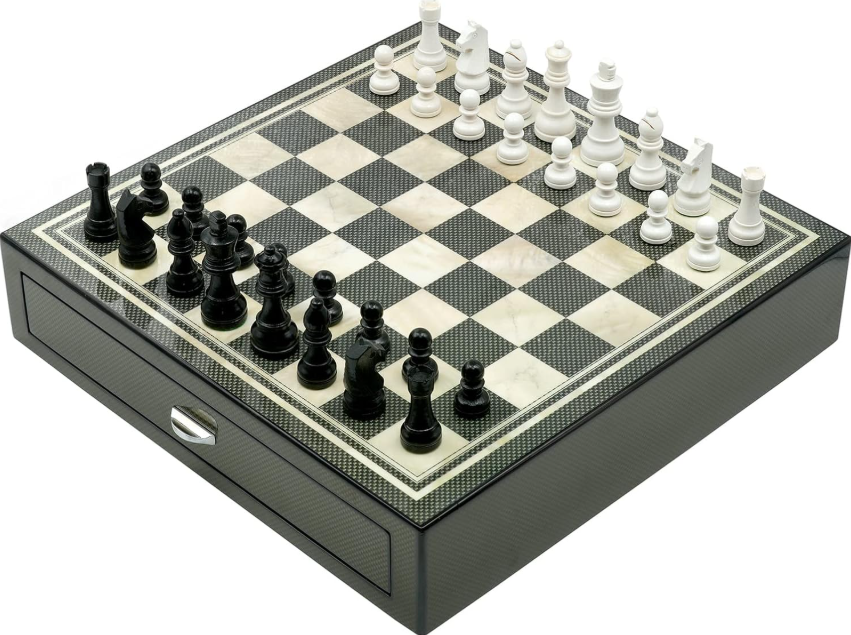
Kids Chess Set
Chess is widely regarded as one of the most intellectually enriching games ever created, and the Kids Chess Set is designed to make this ancient game accessible, beautiful, and genuinely fun for children aged 5 and up. With its colorful, oversized pieces, simplified learning guide, and durable construction, this chess set removes all the barriers that prevent young learners from discovering one of humanity’s greatest intellectual traditions.
Why Chess for Children?
Research consistently shows that children who learn chess early demonstrate stronger academic performance across multiple subjects, including mathematics, reading comprehension, and science. Chess teaches children to think ahead, consider consequences, evaluate options, and make decisions under uncertainty — skills that transfer directly to academic and professional success.
Beyond academics, chess builds character. Every game is won or lost based on the quality of thinking — not luck, not physical strength, not social advantage. Chess is one of the few arenas where a child’s mind is the only tool that matters, and this experience is profoundly empowering.
What’s Included in the Kids Chess Set
The Kids Chess Set includes a full-size, colorful printed chess board, 32 oversized playing pieces in two contrasting colors, a laminated quick-reference guide showing how each piece moves, a beginner’s puzzle book with 20 simple checkmate challenges, and a carrying bag to keep everything organized. Everything a child needs to go from complete beginner to confident player is included in one beautifully packaged set.
Child-Friendly Design Innovations
Standard chess sets are designed for adults, with small pieces and subtle color differences that can frustrate young learners. The Kids Chess Set addresses these pain points directly. Pieces are 25% larger than standard size, making them easy to grip and place. Each piece type features a distinct sculpted design that makes identification effortless. The board features light and dark squares in high-contrast colors (blue and cream, for example) rather than the subtle brown-and-beige of traditional sets. Movement arrows are optionally printed at the base of each piece in beginner editions, providing a visual reminder of each piece’s movement pattern without requiring constant reference to the rule book.
Learning Pathway: From First Move to First Win
The Kids Chess Set comes with a structured three-stage learning pathway designed by chess educators. Stage one introduces the board and pieces, teaching names and movement patterns through simple drills. Stage two introduces basic strategies — controlling the center, protecting the king, developing pieces early. Stage three presents the beginner’s puzzle book, where children solve simple “checkmate in one” puzzles that build pattern recognition and tactical awareness. This structured progression ensures children feel competent and motivated at every stage of their development.
Social and Emotional Development
Chess is fundamentally a social game, and the Kids Chess Set creates rich opportunities for social and emotional growth. Playing chess with siblings, parents, classmates, or friends teaches children to be gracious winners, resilient losers, and respectful competitors. The handshake tradition at the start and end of every chess game models sportsmanship in a concrete, memorable way.
Kids Chess Set
The Kids Chess Set is built to survive years of enthusiastic play. Pieces are made from high-density ABS plastic that resists chipping, cracking, and discoloration. The board is made from thick cardboard with a linen-texture surface that provides a premium feel while keeping the set lightweight and portable.
Conclusion
The Kids Chess Set is more than a game — it is a gateway to a lifetime of strategic thinking, intellectual growth, and meaningful social connection. Give your child the gift of chess today, and invest in skills that will benefit them in school, career, and life.
Learning Chess Step by Step: A Parent’s Guide
Teaching chess to a child can feel daunting, but with the Kids Chess Set and the right approach, it becomes a delightful journey you share together. The key is patience, positivity, and a commitment to making every session enjoyable regardless of outcome. Here is a practical four-week framework for introducing your child to chess:
Week 1 — Meet the Pieces: Spend the first week simply introducing each piece by name, showing how it moves, and playing simple mini-games. “Can the Knight take the pawn?” style challenges are perfect for this stage. Use the illustrated movement guide included with the set generously.
Week 2 — Play Mini-Games: Before playing full chess games, introduce mini-games that practice specific skills. Pawn races (only using pawns) teach the concept of promotion. King versus King practice teaches the concept of check and checkmate. These focused mini-games build competence without overwhelming beginners.
Week 3 — First Full Games: Play your first complete games together, keeping the atmosphere light and the feedback positive. Let your child take back moves occasionally to explore consequences without the pressure of irreversible decisions. Focus on enjoyment over competition at this stage.
Week 4 — Introduce Basic Strategy: Introduce the three golden rules of beginner chess: control the center, develop your pieces early, and protect your king. These principles give children a framework for decision-making that elevates their play immediately.
Chess and Academic Achievement
The evidence linking chess to academic achievement is compelling. Studies conducted across multiple countries and educational systems consistently show that students who receive chess instruction demonstrate measurable improvements in mathematics performance, reading comprehension scores, and problem-solving assessments. The Venezuelan Chess in Schools program, one of the most rigorously studied chess education initiatives, found that children receiving chess instruction showed significantly higher IQ gains than control groups over a two-year period.
The skills developed through chess — systematic thinking, working memory, pattern recognition, planning ahead, and evaluating consequences — are the same skills that underlie success across virtually every academic domain. Investing in chess for your child is one of the highest-leverage educational investments available.
Kids Chess Set
One of the greatest gifts you can give a child who loves chess is community. Many schools have chess clubs that welcome beginners, and community centers frequently offer affordable chess lessons for children. Online platforms designed for children (with appropriate safety measures) allow young players to find opponents at their skill level from around the world. Tournaments — even small, local ones — give children the experience of competitive chess in a structured, supervised environment that builds confidence and sportsmanship simultaneously.
